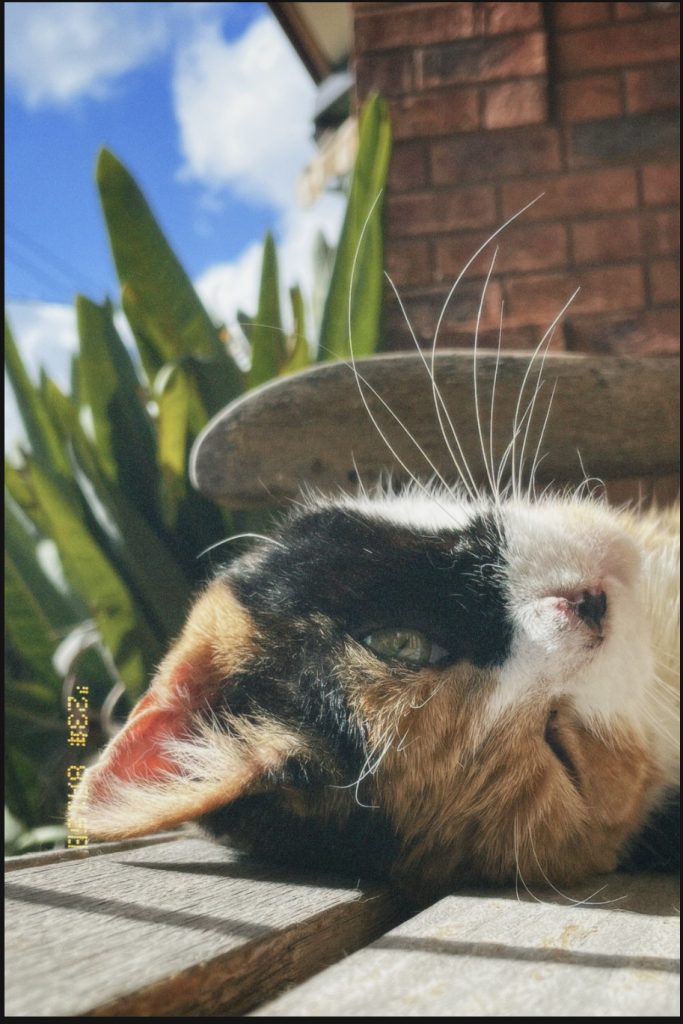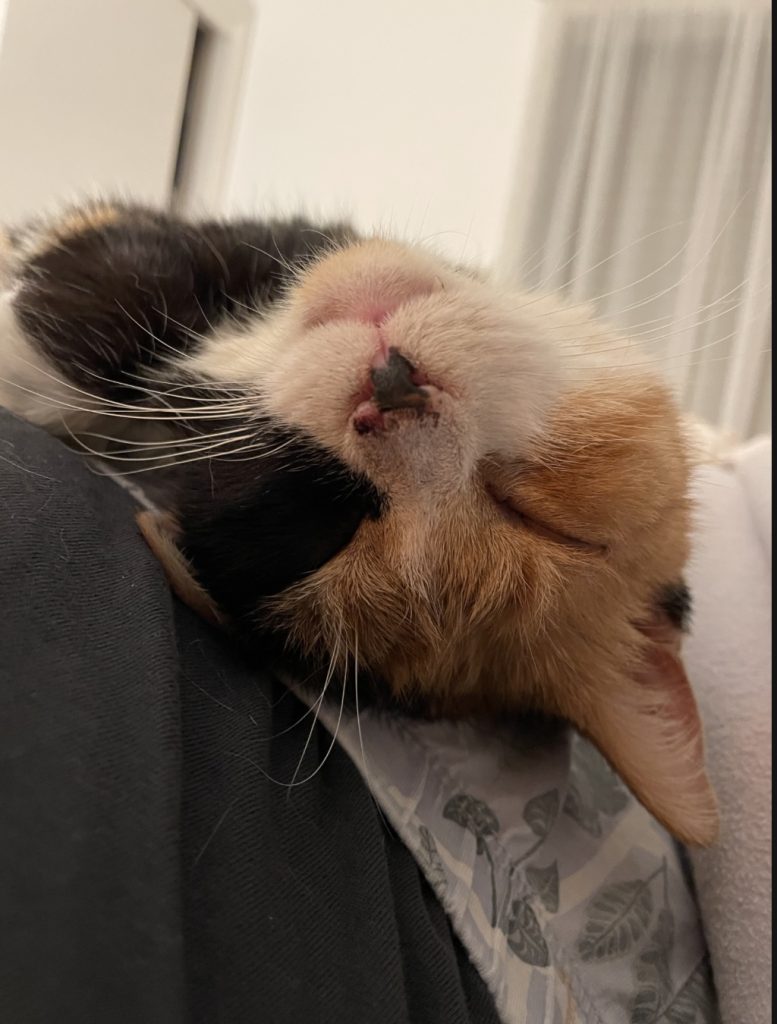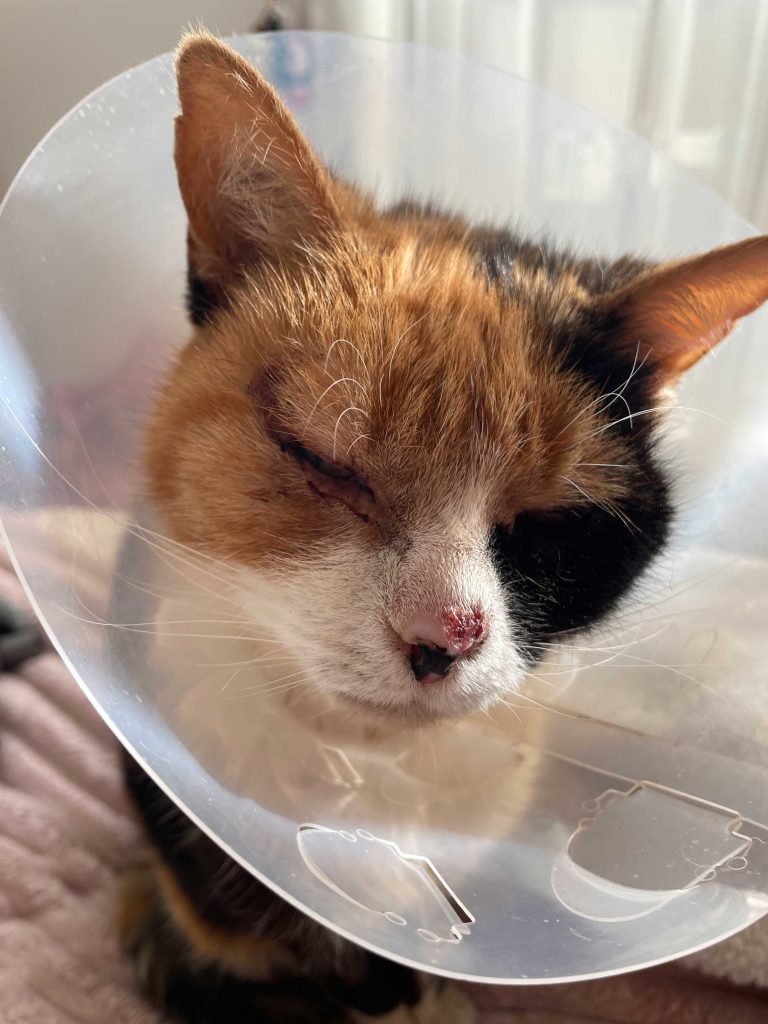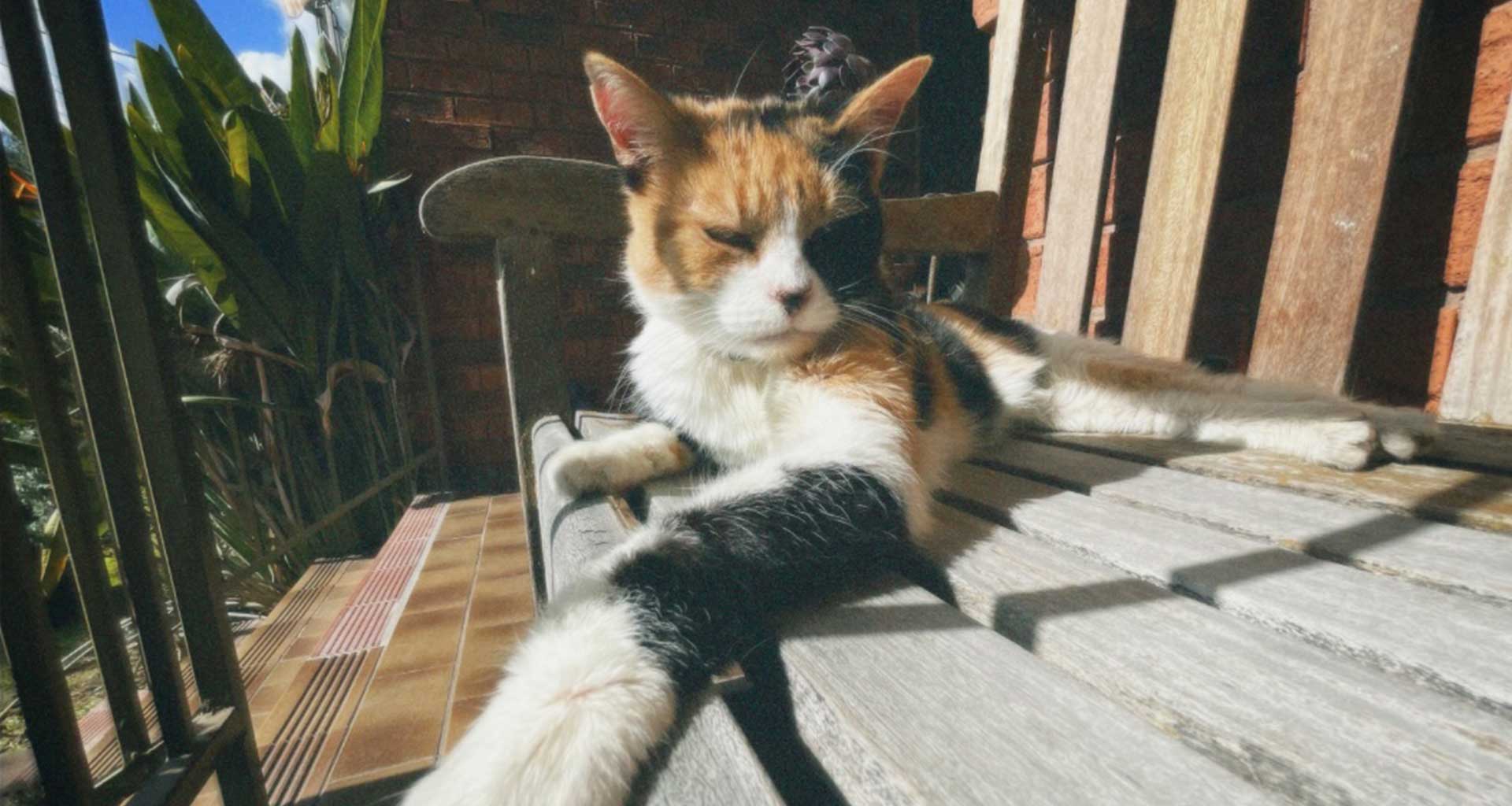
At 16 years old, Bella the cat was living life on her terms until her owner noticed a stubborn scab near her right eyelid that wouldn’t heal. Despite careful cleaning, using medicated ointment, and wearing an Elizabethan collar to prevent further trauma, the lesion persisted. Then a second scab appeared on her nose.
Concerned, Bella’s veterinary team performed a biopsy. The diagnosis: squamous cell carcinoma (SCC)—a type of skin cancer commonly seen in older, fair-skinned cats, especially in areas exposed to the sun such as the nose, eyelids, and ears. SCC usually appears as sores or scabs that don’t heal. While it doesn’t typically spread to other areas of the body, if untreated it can be locally aggressive, damaging surrounding tissues.
One treatment option for Bella was surgery to remove the cancerous lesions. This would require removing a significant amount of tissue, and due to the sensitive location, the reconstruction would have left a large wound and would have been a longer, more painful procedure. Instead, her owner was referred to a veterinary oncologist for a less invasive treatment option: electrochemotherapy.
Electrochemotherapy is a modern treatment that delivers a low dose of chemotherapy directly to the tumour site–not the whole body like traditional chemotherapy. Small, controlled electrical pulses are applied to the area to help the cancer cells absorb the medication more effectively. The resulting treatment is localized, minimizing systemic side effects and sparing healthy tissue.
For Bella, the results were outstanding. Her scabs have fully healed. The cancer has been controlled, and she’s back to her happy, affectionate self.
Her story is a reminder that persistent skin lesions in older cats should always be investigated. With evolving technologies like electrochemotherapy, there are more options than ever to treat cancer effectively and compassionately—even in our most senior patients.
If your pet has a non-healing wound or skin lesion, don’t hesitate to talk to your vet. Early detection can make all the difference.